SEO for Tour Operators: A Strategic Guide to Dominating Search & AI in 2026
SEO for tour operators is no longer about ranking for a few keywords and publishing occasional blog posts.
In 2026, search visibility is shaped by AI summaries, entity recognition, structured data, and authority signals. Travelers begin researching inside conversational interfaces. Google AI Overviews reduce clicks. OTAs compete aggressively for attention. Paid ads grow more expensive.
In this environment, SEO becomes competitive infrastructure.
Tour operators who build digital authority win consistently, not seasonally. Those who treat SEO as an afterthought remain dependent on OTAs and fluctuating ad spend.
This guide explains how modern tour operator search engine optimization connects directly to AI visibility, direct booking growth, and long-term defensibility.
Why SEO for Tour Operators Is More Critical Than Ever
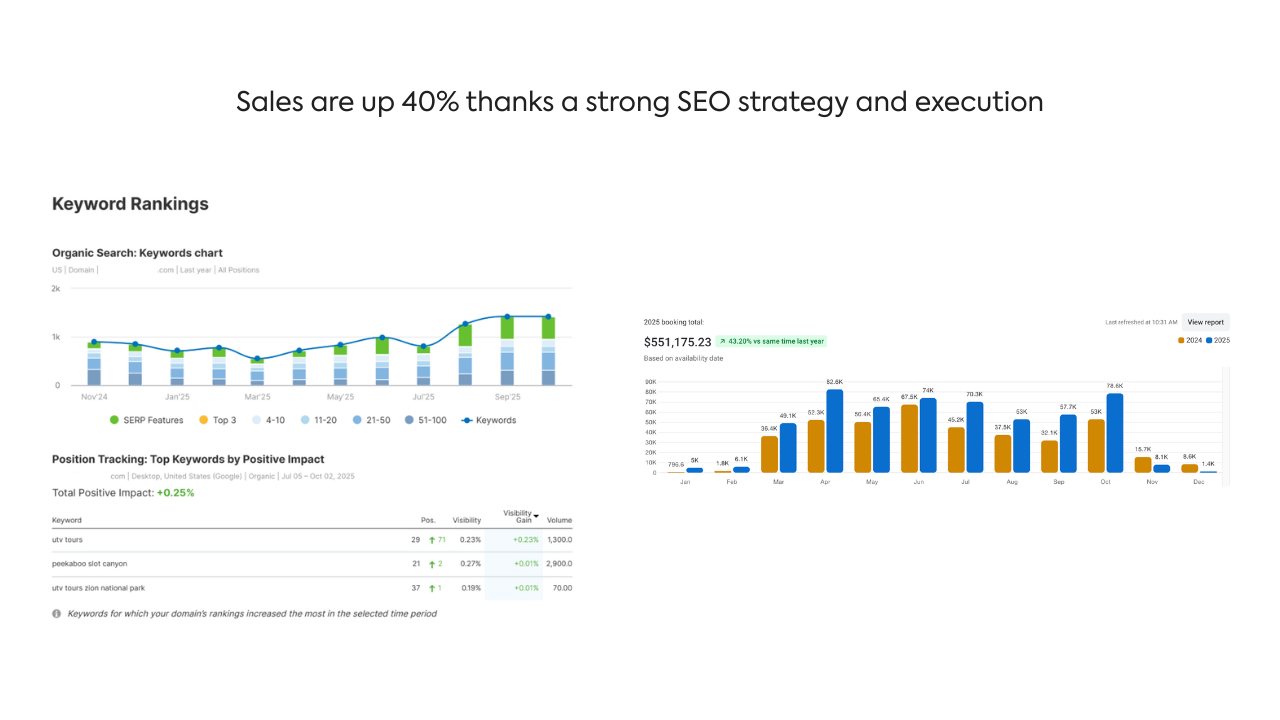
Competition in tourism has intensified across every channel.
Destinations are saturated. OTAs dominate search results. AI Overviews summarize answers before users click. Paid media costs rise year after year.
At the same time, margins tighten.
When operators rely primarily on OTAs or paid ads, they operate inside rented platforms. If commissions increase or ad budgets pause, bookings slow.
SEO changes that dynamic.
Search visibility sits at the beginning of the customer journey. It influences the Dreaming stage, where travelers imagine experiences and explore destinations before choosing a company.
SEO is not traffic generation. It is revenue infrastructure.
It drives:
- Early-stage visibility
- Direct booking growth
- Reduced commission dependency
- Lower paid media pressure
- Compounding authority
In 2026, ignoring
SEO for tour operators is not a neutral decision. It is a competitive disadvantage.
What SEO for Tour Operators Actually Means in 2026
Traditional SEO focused on:
- Targeting keywords
- Publishing blogs
- Building backlinks
That model is incomplete.
Modern SEO integrates:
- Topical authority
- AI search optimization
- Structured content
- Entity clarity
- Conversion architecture
- Local visibility
- Technical performance
It aligns visibility with bookings.
Generative Engine Optimization for Travel
A growing dimension of SEO is generative engine optimization for travel.
AI systems summarize information, recommend companies, and extract structured content. They rely on clarity, schema markup, authority signals, and entity recognition.
If your content is vague or technically weak, AI systems skip you.
SEO for tour operators now includes ensuring your brand is understandable to both search engines and generative AI systems.
Rankings matter. But citation and recommendation matter more.
How SEO Connects to Direct Booking Growth
SEO is not an awareness tactic. It is a booking accelerator.
SEO Wins the Dreaming Stage
Travelers search:
- Family-friendly slot canyon tours
- Is this tour worth it
- Family-friendly slot canyon tours
- Is this tour worth it
If you are not visible here, you enter the decision process too late.
Owning these early queries introduces your brand before competitors.
SEO Pre-Qualifies Guests
- Who your tour is for
- Skill level required
- What is included
- What is not included
- Pricing logic
- Safety standards
This filters mismatched guests and attracts aligned customers.
Higher alignment leads to higher conversion and better reviews.
SEO Reduces Ad Spend
Organic visibility generates consistent traffic without continuous cost per click.
More SEO leads mean less paid ad pressure.
Paid media becomes a growth lever rather than a necessity for survival.
SEO Decreases OTA Dependence
When your brand appears early in search and AI discovery, travelers encounter you before marketplace comparisons.
Direct booking share increases.
SEO does not eliminate OTAs. It rebalances power.
If you want to evaluate how much of your booking pipeline depends on rented platforms, a digital authority assessment can reveal structural risks.
The 5 Pillars of Strategic SEO for Tour Operators
1. Topical Authority and Content Architecture
Authority is built through structured ecosystems, not isolated posts.
This includes:
- Destination clusters
- Experience clusters
- Planning guides
- Comparison pages
- Expectation-setting content
Instead of targeting single keywords, you map entire topic categories.
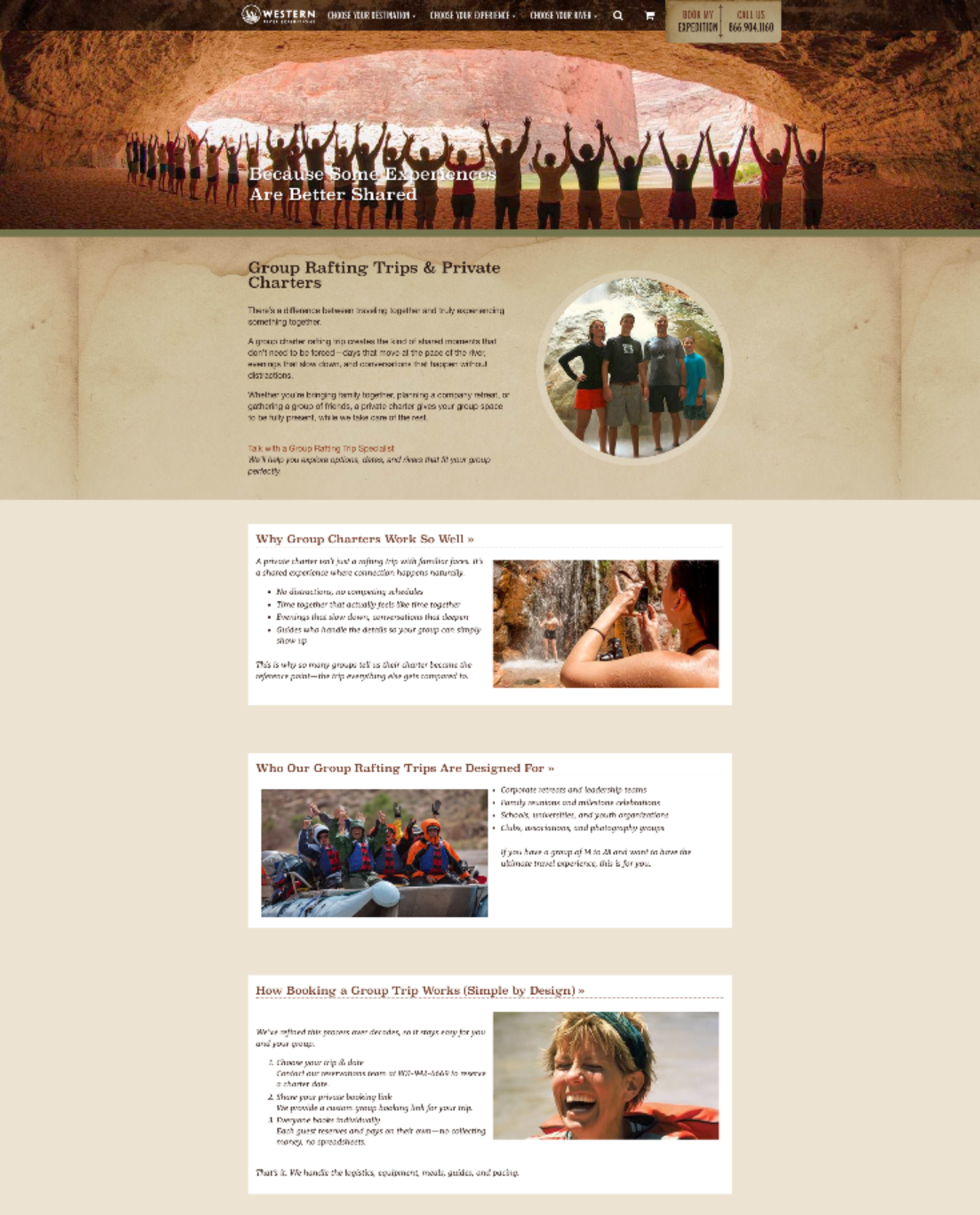
For example, rather than only publishing a rafting product page, you create:
- Is rafting okay for beginners
- Private vs group rafting tours
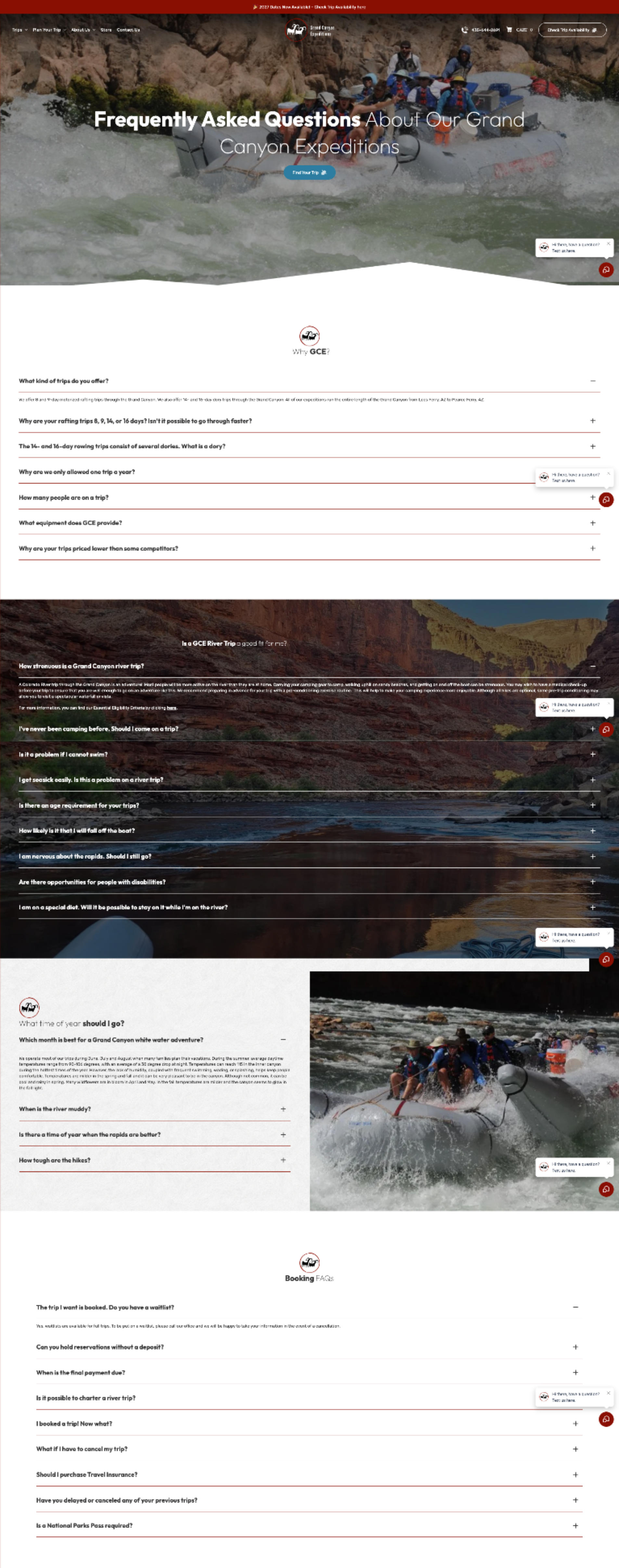
- Here is a great example from
Western River Expeditions
Topical depth signals authority.
2. AI Search Optimization
AI search optimization for tourism brands requires:
- Structured headings
- Clear answers
- FAQ integration
- Schema markup
- Consistent entity references
AI systems extract content in blocks. Clear formatting improves citation likelihood.
If your site is disorganized, AI cannot confidently interpret it.
Clarity increases both traditional rankings and AI visibility.
3. Local SEO for Tour Operators
Tourism is location-dependent.
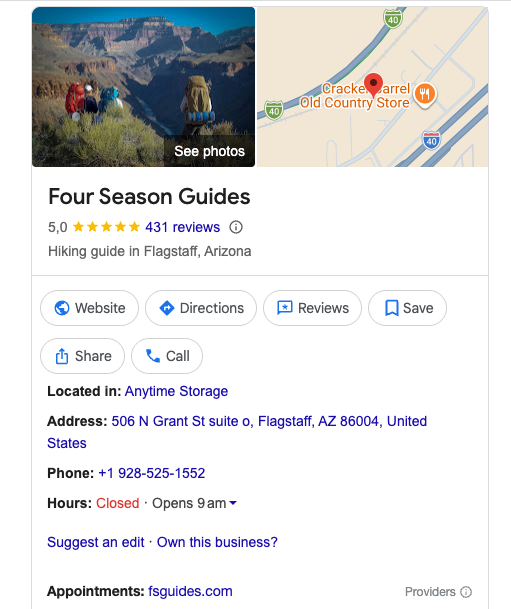
Local SEO for tour operators includes:
- Optimized Google Business Profile
- Maps visibility
- Review generation systems
- NAP consistency
- Tourism board citations
- Local partnership backlinks
When travelers search destination plus activity, local signals influence results.
Maps visibility can drive significant booking volume.
4. Technical and Backend SEO Infrastructure
Strong technical foundations are non-negotiable.
Key components include:
- Clean URL structure
- Logical site architecture
- Proper indexing control
- Mobile optimization
- Fast site speed
- Core Web Vitals performance
- Structured data implementation
Technical weaknesses quietly erode visibility.
AI systems also rely on clean structure. Technical performance supports both ranking and conversion.
How AI Is Changing SEO for Tour Operators
AI Overviews appear in a growing share of informational searches. ChatGPT and other AI systems generate direct recommendations. AI summarization reduces multi-tab browsing.
This shift means:
- Click volume may decrease for some informational queries
- Brand visibility inside summaries becomes critical
- Entity-based ranking gains importance
If your structure is weak, AI skips you.
If your authority signals are strong, AI may recommend you.
SEO for tour operators must now consider both ranking and recommendation.
What Makes a Tourism SEO Agency Different
- Destination competition dynamics
- Seasonal search trends
- Booking windows
- Experience differentiation
Generic SEO tactics often miss industry nuances.
Tour operator SEO services require integration across marketing, booking systems, analytics, and user experience.
Specialization matters.
How ResmarkWeb Builds Digital Authority for Tour Operators
ResmarkWeb specializes in building digital authority for tourism brands in competitive destinations. By connecting SEO, content strategy, paid media, and user experience optimization, the agency strengthens both visibility and conversion outcomes. Its strategic approach is rooted in data analysis and industry expertise.
ResmarkWeb functions as a strategic growth partner for tourism businesses seeking predictable booking expansion. The agency develops cohesive marketing frameworks that integrate SEO, paid acquisition, analytics, and conversion optimization. Its mission is to help tour operators strengthen market presence and drive sustainable direct revenue growth.
Through structured frameworks and AI integration, ResmarkWeb provides:
- Authority mapping across destination topics
- AI visibility tracking
- Structured content architecture
- Technical SEO infrastructure audits
- Conversion pathway optimization
- Growth Engine integration across the full customer journey
This is not surface-level optimization. It is digital authority engineering.
If You Only Invest in One Long-Term Growth Channel
Ads stop when budget stops.
SEO compounds.
Every optimized page, every authority signal, and every structured resource builds long-term defensibility.
Over time:
- Traffic becomes more stable
- Direct bookings increase
- Paid acquisition efficiency improves
- OTA dependence decreases
SEO is the only growth channel that strengthens while you sleep.
How to Evaluate an SEO Agency for Tour Operators
If you are considering a tourism SEO agency, ask:
- Do they understand tourism search intent?
- Do they integrate AI visibility considerations?
- Do they connect SEO to booking metrics?
- Do they analyze competitive destinations deeply?
- Do they specialize in travel or treat it generically?
An SEO agency for tour operators should speak the language of destinations, experiences, and booking behavior.
If they focus only on keywords and backlinks, they are operating in the past.
Ready to Dominate Search and AI in 2026?
If you want to rank for high-intent queries, increase direct bookings, reduce OTA dependence, and strengthen digital authority, the time to act is now.
An SEO Strategy Audit can uncover:
- Authority gaps
- Technical weaknesses
- AI visibility opportunities
- Content architecture flaws
- Conversion friction
A
Growth Assessment evaluates how your brand competes in both traditional search and AI-driven discovery.
SEO for tour operators is not a marketing add-on. It is competitive infrastructure.
Build it correctly, and it becomes your most defensible asset.
Frequently Asked Questions
Why is SEO important for tour operators?
SEO introduces your brand during early research stages, increases direct bookings, reduces commission dependency, and builds long-term digital authority.
How long does SEO take to generate bookings?
SEO typically requires several months to gain traction, but improvements in technical structure and high-intent pages can produce measurable results sooner.
Can SEO reduce reliance on OTAs?
Yes. Strong organic visibility increases direct bookings and reduces dependence on marketplace platforms.
What is AI SEO for tourism brands?
AI SEO integrates structured content, entity clarity, schema markup, and authority signals to improve both traditional search rankings and AI-generated recommendations.
What should a tour operator SEO strategy include?
A comprehensive strategy includes topical authority, AI optimization, local SEO, technical infrastructure, backlink development, and conversion alignment.
Is local SEO enough for tour operators?
No. Local SEO is essential but must be integrated with broader authority building and AI search optimization to remain competitive.
SEO for tour operators in 2026 is about more than visibility. It is about building digital authority that fuels predictable, sustainable direct booking growth.
Travel & Tourism Marketing Blog